Your staff spend their day scanning barcodes
Library RFID replaces the barcode with a contactless tag that is read at a distance and in batches. One tag serves lending, returns, sorting, stocktaking and security. Which means the desk stops being a scanning station, the Monday morning backlog is already checked in, and a full stocktake no longer costs a week of closure. This site documents the equipment, the standards and the integration work, in the words of people who install it rather than of people who sell it.
We publish in French for the French market and in English for the Benelux and beyond. The English pages below are a working subset: the deeper technical and procurement material stays in French, and we are happy to talk you through it.
Five areas, one tag
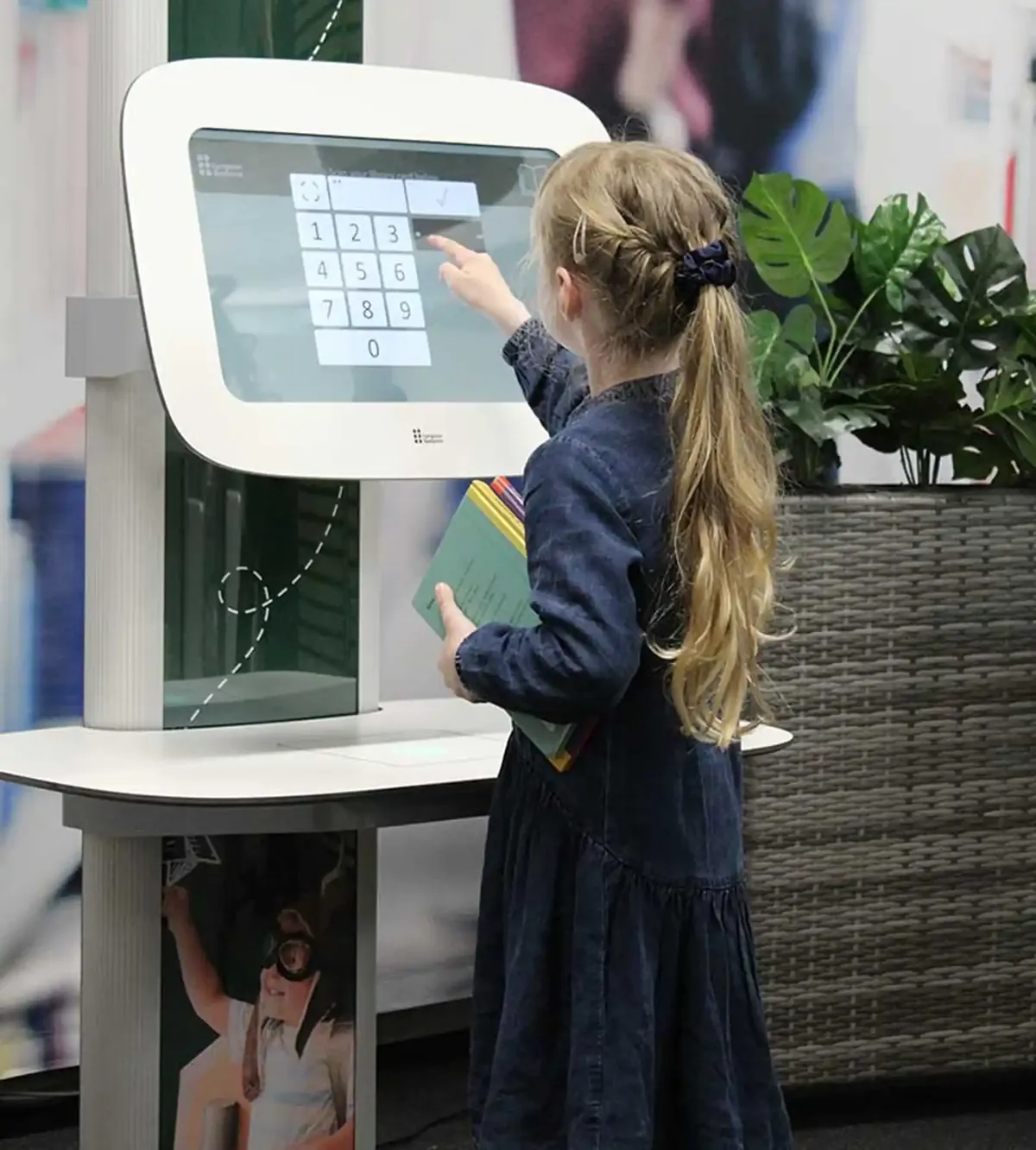
Self-service lending
Kiosks that read a whole stack at once, in four formats, with an adjustable working height for accessibility.
Read more →Returns and sorting
Return units that work when you are closed, and a modular sorter that extends one outlet at a time.
Read more →Security and stocktaking
Gates that work without the network, and a handheld that reads shelves at up to 30 tags per second.
Read more →The equipment range
Eighteen products with their dimensions, throughputs and standards as published by the manufacturer.
See the range →LMS integration
SIP2, NCIP and REST. What the protocol carries, what it does not, and who has to enable it.
Read more →Budget and cost drivers
Where the money actually goes, and why tagging the collection often costs more than the kiosks.
Read more →What we tell people before they buy
Three things, consistently, because they decide more projects than any specification does.
Tagging the collection is the largest single line. On a collection of any size, the tags and the labour to apply them usually exceed the cost of the kiosks. A budget that counts the visible equipment and forgets 50,000 tags is a budget that will be revised.
A sorter is not always justified. It saves time on manual pre-sorting, not on the return itself, which the return unit has already automated. A single-site library with three sections rarely recovers the investment. A network that vans items between branches recovers it quickly.
RFID does not put your shelves in order. A handheld reader tells you an item is present in the range you walked, and flags items that do not belong there. It does not tell you the item is sitting between the wrong neighbours. Anyone claiming shelf-order verification over HF RFID is describing a different technology.
That posture is deliberate, and it is how we work: we would rather lose a line item than sell one that will not pay for itself.
The questions that come up every time
Do you work outside France ?
Yes. CIPAM is the exclusive distributor and integrator for Lyngsoe Systems Library Solutions in France and the Benelux, which covers Belgium, Luxembourg and the Netherlands. For projects elsewhere we will tell you plainly whether we are the right partner, and point you to the manufacturer if we are not.
Which languages do you work in ?
French and English for the project itself. The kiosk interface is multilingual and configured per library, so a Brussels installation can run in French, Dutch and English on the same device.
Can we see a working installation ?
A site visit is worth more than any demonstration, and we would rather arrange one than talk you through a slide deck. Tell us where you are based and we will put you in touch with a library within reach.
Is the equipment made in Europe ?
Lyngsoe Systems Library Solutions is a Danish company and the range carries CE marking. Some datasheets, such as the LibDeco T10, carry an eco-design label stating design, manufacture and repairability in Europe. For a tender requirement on origin, ask us for the manufacturer's statement.
Tell us about your library
Collection size, annual transactions, the LMS you run. Three figures are enough for us to say what makes sense in your building, and what does not.